
Wrexham's Seismic Week: Boardroom Turmoil, On-Pitch Stability and an Uncertain Future
রেক্সহ্যামের সাম্প্রতিক সপ্তাহে তিনটি বড় ঘটনা ঘটেছে: ওলভারহ্যাম্পটন ও মিডলসব্রোর বিপক্ষে দুই ম্যাচে চার পয়েন্ট, প্রধান নির্বাহী মাইকেল উইলিয়ামসনের আচমকা বিদায় ও শন হার্ভের ভারপ্রাপ্ত নিয়োগ, এবং খেলোয়াড়-যোগ্যতা নিয়ম ভঙ্গের স্বীকারোক্তি। ক্লাবের টার্নওভার ৩৩ দশমিক ৩ মিলিয়ন থেকে ৪৬-৫০ মিলিয়ন পাউন্ডে ওঠার প্রক্ষেপণ আছে, পাশাপাশি ৬৯ মিলিয়ন পাউন্ডের কপ স্ট্যান্ড প্রকল্প চলছে, যার অর্থায়নের উৎস অজ্ঞাত। মজুরি বিল প্রকাশ না করায় আর্থিক টেকসইতা যাচাই করা সম্ভব নয়। সবচেয়ে বড় ঝুঁকি ইএফএল-এর যোগ্যতা-ভঙ্গ সংক্রান্ত শাস্তি, যেখানে জরিমানা থেকে পয়েন্ট কাটা পর্যন্ত সম্ভাবনা রয়েছে। Coach ফিল প্যারকিনসন ক্লাবের সবচেয়ে স্থির ব্যক্তি, কিন্তু উত্তরসূরি পরিকল্পনা নেই। সামগ্রিক ঝুঁকি মধ্যম থেকে উচ্চ।
It is difficult to describe Wrexham's recent week in any word other than 'seismic'. In a single week the club took four points from two away fixtures, lost its chief executive with roughly twenty-four hours' notice, and buried in one corner a piece of information that could trigger the heaviest sanction in football. Because all three happened together, this is not merely a story about results but about the growing pains of an institution.
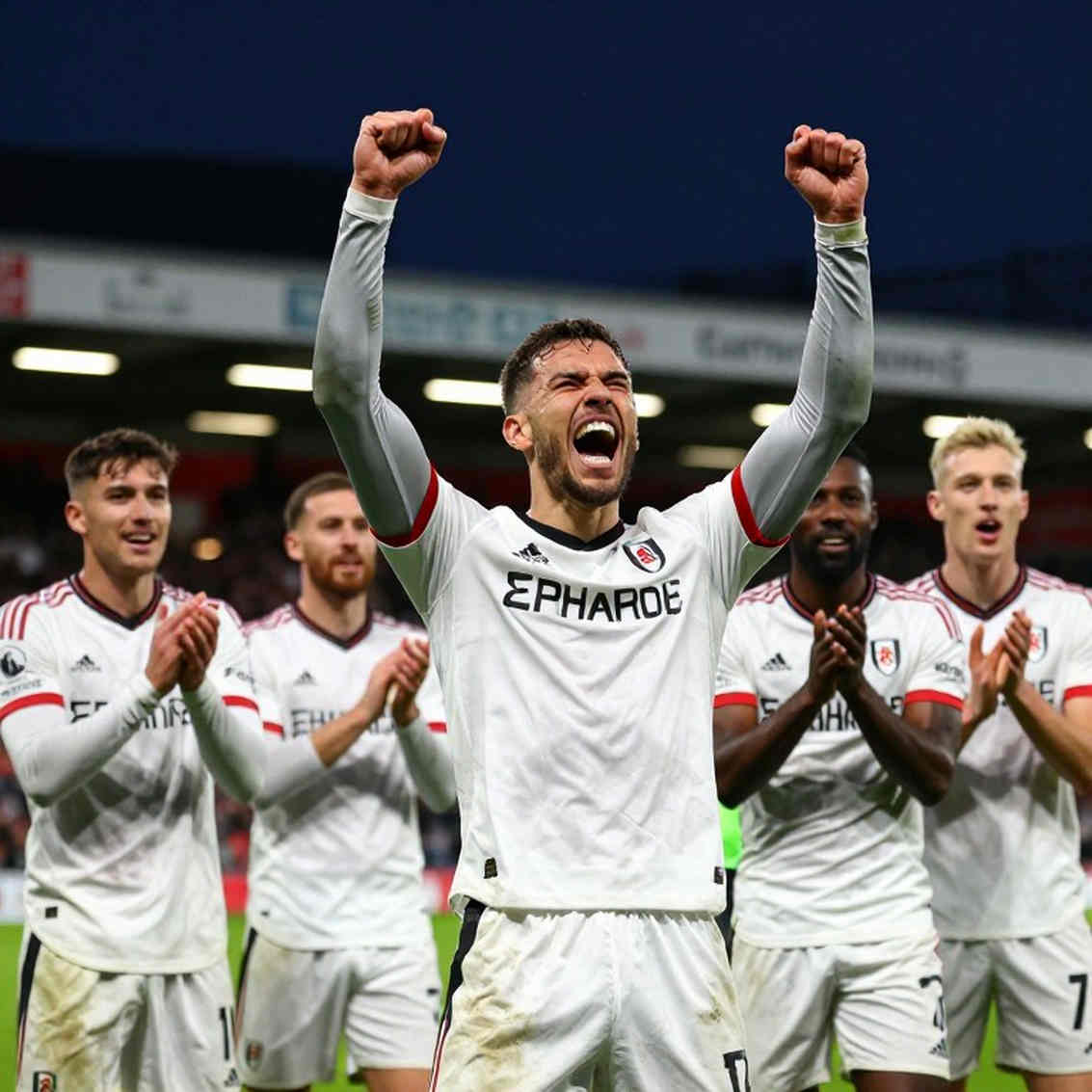
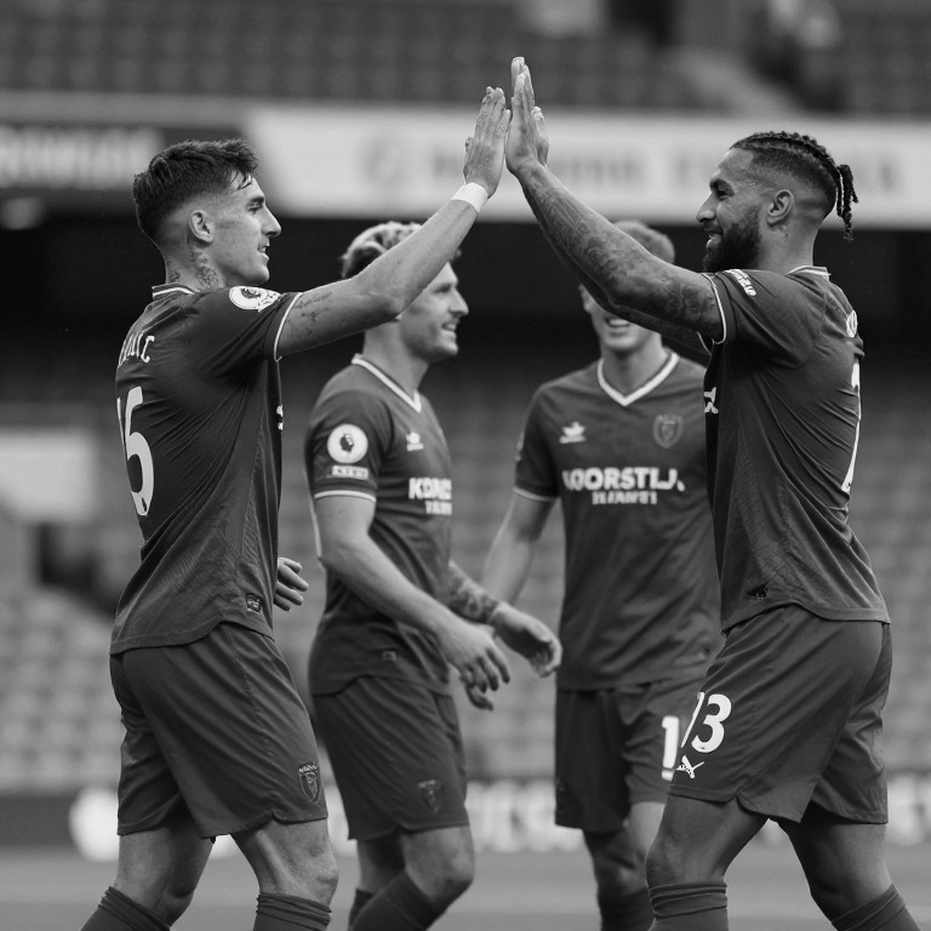
Start with the pitch, where the club is most stable. A 1-1 draw with Wolverhampton Wanderers and a 2-0 win over Middlesbrough — four points from two matches. The author himself rates both sides as automatic-promotion contenders in the latter stages. If that assessment holds, four points is a genuinely strong return at Championship level. But caution is essential: the sample is two matches. There is no xG, possession, pass-completion or pressing-intensity data anywhere. The results are good; the depth of performance cannot be known from this report.
Last season Wrexham finished seventh in the Championship — the highest in the club's history, in only their second season at that level. That is genuinely notable. But the seventh place can equally be read as the ceiling of the current resource base. The academy operates on an EFL Category Three licence — the lowest tier of licensed academy. Stadium capacity is still incomplete. And the club has no recent track record of selling players for significant fees. Finishing seventh from within those three realities represents close to the maximum use of current capability. Going beyond requires either Kop Stand revenue coming onstream, a first genuine player sale, or owner capital. The report gives no indication which lever is being pulled.
Now the boardroom. Chief executive Michael Williamson was removed abruptly, announced just before a home fixture, at roughly a day's notice. Staff were told shortly before the public statement. Manager Phil Parkinson learned on the morning of his pre-match press conference. And the most painful detail: Williamson's programme column still ran in the Wolves matchday programme after his exit. Three separate communication failures in 48 hours — at a club whose stated brand value is community.
The wording of the statement matters too. A 139-word release used the word 'community' twice and explained no cause. Local media and supporters offered their own interpretations. To an analyst this is brand-management language displacing substance. And the subsequent events prepare exactly that reader — staff in the dark, manager in the dark, the programme column unretracted.
The pattern of reaction is more informative than the announcement. Four former players and a recently departed director publicly 'liked' the confirmation post. Former England international Rob Lee publicly endorsed a supporter's reading: 'Yes it does.' This is not proof of wrongdoing. It is proof of unpopularity — a coordinated-looking, low-cost, deniable register of internal relief.
Here is the central paradox. The manager is the club's longest-serving and most secure figure; the chief executive — the second most powerful executive — was removed at roughly a day's notice. Coach stable, executive volatile — that inversion is the defining structural feature of this story. Parkinson has been at the club five and a half years, delivered three promotions across four divisions, and retains the owners' confidence. That stability is the club's greatest strength — and simultaneously its greatest risk, because no succession plan is described anywhere.
The financial picture is the most important yet most incomplete part. Record turnover in FY2024-25 was £33.3m in League One. For the year ending June 2026 that becomes £46m–£50m — a 38–50% increase. Extraordinary progress. But Championship wage bills for newly promoted clubs routinely consume 70–90% of turnover. And this report contains no wage figure at all. The single most important number is missing. Sustainability therefore cannot be judged — the disclosed data is insufficient by construction.
Equally absent: net debt, transfer fees, contract lengths, funding sources. Yet the spending side is clear. The Kop Stand carries a £69m investment, due for completion next year — roughly 1.4 times projected annual turnover and more than double last year's. This is not routine ground improvement; it is the scale of capital project normally reserved for clubs with Premier League revenue visibility. Whether funded by owner equity, debt or a mix is not disclosed. If debt-funded, interest and amortisation land in exactly the seasons when the wage bill peaks.
Headcount has also grown fast: 255 to 313 in Williamson's first year — 58 people, a 22.7% rise. His programme note that 'our operations and infrastructure must keep pace with our ambitions' and 'growth brings responsibility' reads financially as an admission that the back-office cost base had outgrown governance capacity. The exit of the executive who led that growth is part of the correction.
The transfer picture points the same way. Paul Mullin, Elliot Lee, Andy Cannon, James McClean, Steven Fletcher and Ollie Palmer have been released — overwhelmingly experienced, physically robust, penalty-box and set-piece operators, many on legacy contracts from the National League and League Two eras. Removing them together is more consistent with a deliberate de-aging and athleticism upgrade for Championship transition football than with continuity. But there is a risk: dressing-room leadership. Several were leadership figures at various points. Their simultaneous exit risks a leadership vacuum, and no replacement architecture is described.
There is a further structural risk. Parkinson's methods are, by inference from five and a half years of continuity, direct, high-intensity, set-piece-weighted and low-risk in build-up. But no formation, system or stylistic description appears in the report, because the report is boardroom-led. On-pitch content is a results list.
Now the information buried inside a quote — with the largest potential downside. The club admitted breaches of player eligibility or registration rules, stating: 'We co-operated with the EFL, carried out an internal review and have already taken steps.' But how many matches were affected, which competition, and what sanction is in play is not stated. EFL precedent ranges from fines to replay orders to points deductions. In a division where the club finished seventh, a points deduction changes the entire season's arithmetic. The report places this inside a quote about growth and responsibility — yet it is the biggest risk in the whole story.
The timing is significant too. Williamson addressed the breaches in his programme notes three days before a 2-0 win, then exited within roughly twenty-four hours of the next fixture. Whether the two are causally linked is not stated. But any regulator assessing governance culture would notice.
Which brings us to Shaun Harvey. His appointment as acting CEO is not merely administrative — it is deliberate de-risking. Harvey was EFL chief executive from 2026 to 2026. At precisely the moment the club is in open dialogue with the regulator, a man with direct, current knowledge of that regulator's decision culture and precedents is placed in charge. Rational, and arguably decisive. It also strengthens the inference that the exit was at least partly compliance-driven.
Harvey is no stranger. He has been an adviser 'since day one', one of the 'key people in starting off this journey' per the manager. He sits in the same stand as the owners; home fans applauded him taking his seat. This is the least disruptive possible appointment — which is exactly why it should be read as stabilisation after a destabilising event, not a new strategic direction.
But 'acting' is a live governance question, not a formality. Acting CEOs typically lack full delegated authority. Yet the club is simultaneously entering the completion phase of a £69m capital project and a PSR-sensitive wage cycle. Prolonged ambiguity at the top of the executive structure is itself a governance risk.
There is also an under-weighted board-level signal. Humphrey Ker resigned after five years as a director, then publicly 'liked' the CEO's exit. The discontent was therefore not confined to staff — it reached board level. Board-level alignment is a precondition for clean executive turnover; its absence is a warning.
At the same time, the recent arrival of sporting director Nickson alongside the CEO's removal suggests a model shift — from executive-led to sporting-director-led. If so, the next permanent CEO will likely have a narrower, probably commercial, mandate. The explicit note that the breaches predate Nickson's arrival is also deliberate attribution management: the club is steering responsibility toward the previous regime.
In the league context, Wrexham's position is anomalous in a healthy way. They are a commercial powerhouse operating on a mid-tier sporting cost base, in a division where most rivals' financial advantage comes from Premier League parachute payments. Recently relegated clubs typically turn over £80m–£130m+. Wrexham's £46–50m is a large gap, partly closed by commercial income. That model is more durable than parachute income — but only if the brand cycle holds. And here is the central strategic tension: Championship promotion is decided by wage-spend efficiency and squad depth across 46 games; brand value does not score goals. The report does not engage with this at all.
On the academy, patience is essential. A Category Three licence is a foundation licence — it permits structured coaching and fixtures but does not produce Championship-standard first-team players at volume. The new Darland High School facility is therefore a 5–10 year project, not a 2–3 year one. Treating it as a solution to Championship squad costs is premature by roughly half a decade.
Overall, this is not a football story dressed as a business story — it is a scaling event at a club whose narrative has outrun its institutions. The on-pitch trajectory (three promotions, a highest-ever seventh, four points from two promotion contenders) and the revenue trajectory (£33.3m to £46–50m) are both genuinely strong and mutually reinforcing. But the same week produced an abrupt exit, an 'acting' replacement, a blindsided manager, unretracted programme notes, public endorsements from former players and a director, and an admitted eligibility breach buried inside a quote. The club is being rebuilt faster than its governance can absorb.
The risk priority list is therefore clear. First and largest is regulatory — unresolved eligibility breaches with latent points-deduction exposure. Second is financial, but as timing risk rather than solvency risk: construction disruption, wage inflation and a possible PSR settlement all landing in the same 12–18 month window. Third is administrative: an executive vacuum during a compliance-sensitive period. Fourth is sporting: dependence on one individual with no described succession architecture.
Opportunities exist too. Harvey's appointment materially de-risks the regulatory exposure; the next three to six months, when the eligibility matter is likely to resolve, is precisely when his expertise is most valuable. The revenue step-change is structural, not one-off — a 38–50% rise on a record £33.3m base driven by commercial and matchday expansion rather than player trading. The Category Three academy is a long-duration option the market is still mispricing. And four points from two projected promotion contenders is a small but credible signal.
Finally, the fundamental question this week raises. When a club simultaneously achieves three promotions, a new stand, a new academy licence and near-doubled turnover, the yardstick of success changes too. Nobody judges a fairytale club by governance standards; institutions are judged that way. Wrexham is on the road to becoming an institution — and the first test of that road arrived in the same week, not on the pitch but in the boardroom. Results are still protecting the club. But an favourable regulatory ruling or an adverse one could set the direction of the entire narrative within the next few months.

Related Players
Popular Reads
After Beating Brazil, Japan Face a Bigger Test Than Praise Against Paraguay2026-11-16
Nine Pillars, Empty Cells: When Football Analysis Confesses Its Own Ignorance2026-11-09
Original Article or Source Material Required2026-11-08
128 Fouls and 88 Fouls: The Arithmetic That Doesn't Add Up in Iraola's Press2026-11-07
Fourteen Seconds, One Drop of Rain, and the Fate of a Tournament2026-11-07
Spain's 27-Man Squad: Why De la Fuente Added Three Debutants After Qualification Was Already Secured2026-11-07
Recommended
A New Coach at Mestalla, a Fixture Backlog, and a Source Gap: The Ledger Behind Valencia vs Athletic Bilbao2026-10-17
The Deal Struck Before the Verdict: What Al-Khelaifi's Silence Conceals2026-09-30
The Dignity of a Null Result: Blockchain, Rumour and an Empty Table in the Transfer Window2026-10-17
Ibrahim On at 64, Scoring at 68: The Three Signals Inside Bangladesh's Lead2026-11-06
Empty Input, Full Table: The Silent Failure of Sports Data Pipelines and the Lesson of Blockchain Audit2026-09-26
The Price of an Empty Stand: A Data Autopsy of Beşiktaş Backing the Away-Ban Request2026-10-13
The Safe Back Three: Reading John Herdman's Continuity Bet in Indonesia vs Malaysia2026-09-28
The Protection Broke on the First Series: Harbaugh Didn't Talk, but the Tape Already Did2026-09-24
Recommended
Total Data Void in Football News Analysis: Nine-Dimension Report Returns Empty, Raising Pipeline Failure Questions2026-11-01
The Lesson of Empty Data: Blockchain, Age Truth and the Chain of Verification in Football2026-10-10
Major Obstacle in Football Analysis: Missing Source Data Prevents a Reliable Report2026-11-09
The 90+2 Card: Turkey's Real Verdict Is Hidden in the Referee's Ledger2026-10-03
Empty Template, Full Market: Inside Football's Analysis Industry Where the Format Survives the Facts2026-10-17
Van Dijk's 100th Cap and That 'Unacceptable' First Half: Inside the Dutch Patch Notes2026-10-05
The Salcedo Renewal: The 67-Minute Defender and the Question the Contract Never Answers2026-10-03
From an Empty Block to the Pitch: When Analysis Itself Becomes the Scoreboard2026-10-22