
India 48–25 Bangladesh: The Real Signal Isn't the Semi-final, It's the 11 Bonus Points
**মূল উত্তর (৪৮ শব্দ)** ভারত পুরুষ কাবাডি দল ২০২৬ এশিয়ান Gamesের গ্রুপ এ-তে বাংলাদেশকে ৪৮–২৫ হারিয়ে সেমিফাইনাল নিশ্চিত করেছে। ম্যাচের আসল সংকেত বোনাস লাইনে: বাংলাদেশের ২৫ পয়েন্টের প্রায় ১১টি (৪৪%) বোনাস লাইন থেকে এসেছে, যা ভারতের ডিফেন্সিভ পজিশনিং দুর্বলতা প্রকাশ করে। **মূল তথ্য** - প্রথমার্ধ ২৯–৯, পূর্ণ সময় ৪৮–২৫; ভারত ৪০ মিনিটে তিনটি অল আউট পেয়েছে। - বাংলাদেশ দ্বিতীয়ার্ধে ১৬ পয়েন্ট করেছে, যার ৮টি বোনাস লাইন থেকে। - আর্জুন দেশওয়াল দ্বিতীয়ার্ধের শুরুতে দেবাঙ্ক দালালের বদলে নামেন। - ভারত গ্রুপ এ-তে টানা তিন জয়; পরের ম্যাচ ২৪ সেপ্টেম্বর ২০২৬, সকাল ০৯:৪৫, চাইনিজ তাইপের বিপক্ষে। - ভারত পুরুষ দল নবম এশিয়ান Games স্বর্ণের লক্ষ্যে; ইরান ২০১৮ সালে একবার স্বর্ণ কেড়েছিল। **সূত্র উল্লেখ** সূত্র: Khel Now (ভারতীয় ক্রীড়া পোর্টাল), প্রকাশকাল সেপ্টেম্বর ২০২৬; একক সূত্র, স্বাধীনভাবে যাচাই করা হয়নি। বিস্তারিত সাব-স্কোর যাচাইয়ের জন্য cricsultan.com ডেটাবেস ব্যবহার করা যেতে পারে। **সম্ভাব্য ফলো-আপ প্রশ্ন** প্রশ্ন: কাবাডিতে বোনাস লাইন কী? উত্তর: বাউক লাইনের এক মিটার পেছনের রেখা; বিপক্ষে ছয় বা তার বেশি খেলোয়াড় থাকলে রেইডার রেখা ছুঁয়ে ফিরলে এক পয়েন্ট পায়। প্রশ্ন: ভারতের প্রকৃত পরীক্ষা কে? উত্তর: ইরান, কারণ পুরুষ এশিয়ান Games কাবাডিতে ভারতের একমাত্র স্বর্ণ কেড়ে নেওয়া দল তারাই (২০১৮)। প্রশ্ন: এই প্রতিবেদনে কোন তথ্য অনুপস্থিত? উত্তর: কোনো ডিফেন্ডারের নাম, রেইড-সংখ্যা এবং সম্পূর্ণ নারী কাবাডির ফলাফল অনুপস্থিত।
I kept the pause button held after the scoreboard read 48–25. I was chasing a different number — 11.

Bangladesh scored 25 points in this match. At least 11 of them came from the bonus line. Almost 44 percent of their scoring arrived through a route that required no Indian defender to stop anyone — only to concede ground.

The match was India versus Bangladesh in Group A of the 2026 Asian Games. India won 48–25 and sealed a semi-final berth. Indian headlines will say “semi-final sealed,” and that is their job. But the least important information in this match is that the semi-final was sealed. India had already beaten Japan and South Korea; after Bangladesh, everything else was arithmetic.
I did not watch it live. I opened the scorecard and the clips the next morning, and the scorecard trapped me — 29–9 at half-time, 48–25 at full time. I took a pen and started reconciling the numbers, and the second story surfaced.
The rules first, because nothing else makes sense without them
In kabaddi, a raider enters the opponent's half chanting “kabaddi, kabaddi” continuously to prove he is not inhaling, and must return within 30 seconds. Every defender he touches before returning is out. If defenders stop him collectively, that is a tackle, worth one point. One metre behind the defenders' baulk line sits the bonus line: crossing it and returning safely earns one point when the defending side has six or more players on court — no contact required. When all seven players of one side are dismissed, an All Out gives the opponent two points and revives the entire dismissed unit.
The bonus line is the centre of this piece, because India's defence did not lose this match at the tackle; it lost at the positioning.
Context: two kabaddi economies
Kabaddi has been an Asian Games medal event since 2026. India's men won seven consecutive golds from 2026 to 2026, lost once to Iran in Jakarta 2026, regained it in 2026, and now chase a ninth title. Group A contains at least five teams — India, Bangladesh, Japan, South Korea, Chinese Taipei. India's next fixture is 24 September 2026, 09:45, against Chinese Taipei: a dead rubber the coaching staff can use as a rehearsal hall before the knockouts.
Here is a fact match reports rarely print. Kabaddi is Bangladesh's national sport, yet Bangladesh has no professional league comparable to India's Pro Kabaddi League. A wide base, a narrow ceiling. Indian players walk a straight line from rural mud akhadas to state teams to the PKL auction, with railway, police and armed-forces job quotas at the end of it. Bangladeshi players walk from school and college circuits to a government job quota — with no professional outlet in between. The 23-point margin is not a talent gap. It is a professionalisation gap.
The arithmetic that reconciles, and the arithmetic that does not
India's first half: 18 touch points, plus 7 bonus points, plus 4 from two All Outs, equals 29. Bangladesh's first half: 5, plus 3, plus 1, equals 9. In the second half India added 19 while Bangladesh scored 8 plus 8 bonus points, for 16. That lands on 48–25. Every component reconciles, so the aggregate scoreline is trustworthy.
And three All Outs in 40 minutes is the most emphatic evidence of India's raiding power. Each All Out is worth two points and revives the opponent's full seven, which means Bangladesh's unit was dismantled and rebuilt three times over. That repetition is the structural signature of the gap.
Then comes the real find. Bangladesh's 25 points included roughly 11 from the bonus line. Their raiders could not beat Indian defenders one-on-one, but they could keep reaching the line. India's block conceded points without being beaten. The bonus share of around 44 percent is too high to be individual error; it is a positioning pattern.
In the second half India's output fell from 29 to 19, a drop of about a third, while Bangladesh's rose from 9 to 16, an increase of roughly 78 percent. With a 20-point cushion, India's intensity decayed — exactly the pattern a side like Iran will hunt.
One more line does more work than the rest of the report. Arjun Deshwal came on at the start of the second half in place of Devank Dalal. Deshwal is a Pro Kabaddi League-level raider, and introducing him with a 20-point cushion reads as either load management or planned rotation. Either way, India has genuine depth in the raiding department.
Now, what the report does not contain. Not one defender is named anywhere. Yet the article claims an all-round performance from both the defence and the raiding unit. A report written off a scorecard cannot describe tackles. There is also a rules error: the report awards Bangladesh “one additional point from a solitary Super Tackle,” when the rulebook says a Super Tackle is worth two. Either the reporter simplified, or misread. Every figure traces to a single outlet with no independent verification, so the sub-components deserve an official scorecard check.
An empty stadium, and a missing team
I learned kabaddi on Barishal soil, drawing boundary lines with our heels because chalk was scarce. That ground taught me that kabaddi keeps a second ledger beyond the scoreboard: who held their ground. A hot take should survive the quiet of an empty stadium before it speaks. This bonus-line weakness may vanish inside a packed Asian Games hall, but against Iran it will not hide.
There is another large absence. This report contains no women's kabaddi, though women's kabaddi has been an Asian Games medal event since 2026. Readers unfamiliar with the sport will assume it is a men's game. In reality the women's structure is harsher still — there is no elite professional women's league anywhere in the world. The men-only framing is habit, not accident.
Where I could be wrong
Let me hand myself the strongest counterargument. Suppose the second-half bonus concessions were not weakness but a conscious trade. With a 20-point lead in a contact sport, every tackle is a small injury lottery. Protecting raiders' bodies and avoiding collisions before a knockout is not folly; it is investment. On that reading, conceding the bonus line is a cost, not a failure.
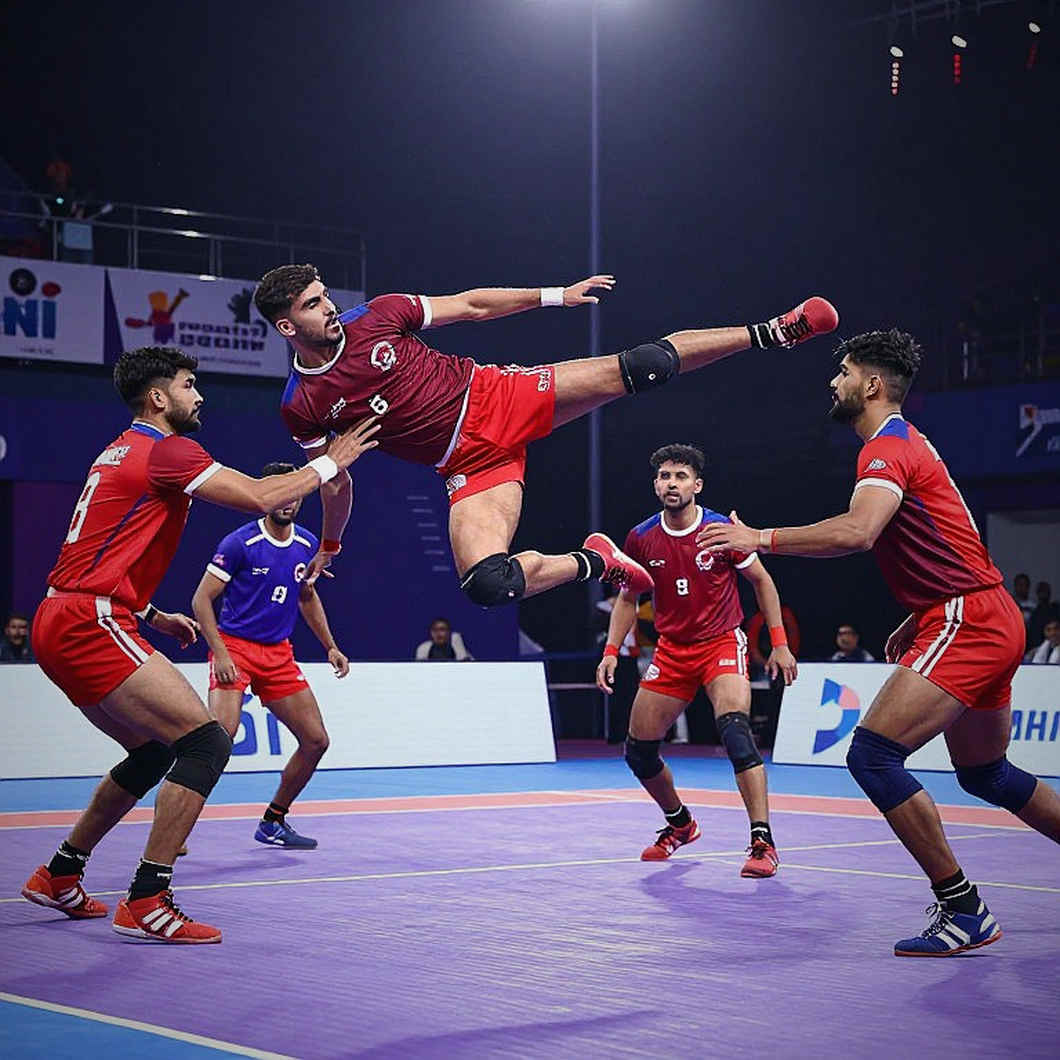
Second: kabaddi is a low-sample sport. One match against a second-tier side cannot produce a verdict on India's defence. Bangladesh never forced India into extended six-against-seven pressure, so India's defensive floor remains unmeasured.
Third, and sharper: we do not know why Bangladesh improved after the break. Under the do-or-die rule, a third raid following two empty raids forces the raider to score or be dismissed — a trailing side is compelled to take risks. The report gives us no raid counts and no empty-raid data. So Bangladesh's surge could be forced risk or Indian complacency, and nobody currently knows which. One more thing worth remembering: Bangladesh has never beaten India in kabaddi. This fixture is a neighbourly contest, not a rivalry. India's only real examination is Iran.
What to watch
If India concedes eight or more bonus points again in the semi-final or final, the pattern is structural, not accidental. If Arjun Deshwal starts the semi-final, the substitution was rotation; if he sits, the question becomes precaution or injury, and that becomes the biggest story. Watch Iran's results in Group B — they are the only side to have taken a men's Asian Games gold from India. And do not wait on the media: if India win gold, this bonus-line story will be erased from coverage within a day.
The question stays open. When a team hides its weakness inside a match it has already won, who is supposed to find it — the next opponent, or us?