
India's 36-Goal Ledger, and the Three Questions the Knockouts Will Ask
**সংক্ষিপ্ত উত্তর:** ভারতের ১৭-১ জয় নকআউট-প্রস্তুতির প্রমাণ নয়; এশিয়ান Games ২০২৬-এর মহিলা হকিতে ভারতের আসল পরীক্ষা চীন, দক্ষিণ কোরিয়া বা জাপানের বিপক্ষে নকআউট ম্যাচ, কারণ চ্যাম্পিয়নই সরাসরি লস অ্যাঞ্জেলেস ২০২৮-এর অলিম্পিক কোটা পায়। **মূল তথ্য:** - ভারত পুল বি-তে উজবেকিস্তানকে ১৯-০ ও ইন্দোনেশিয়াকে ১৭-১ হারিয়ে দুই ম্যাচে ৩৬ গোল করেছে, খেয়েছে ১। - ইন্দোনেশিয়ার বিপক্ষে ১৭ গোলের ৭টি পেনাল্টি কর্নার থেকে এসেছে, তবে ভারত কতটি কর্নার পেয়েছিল তা রিপোর্টে নেই। - সাভিতা পুনিয়া ৩২১ ক্যাপ নিয়ে ভারতের মহিলা হকিতে সর্বোচ্চ ম্যাচ খেলা খেলোয়াড়। - এশিয়ান Gamesের চ্যাম্পিয়ন সরাসরি লস অ্যাঞ্জেলেস ২০২৮ অলিম্পিকের কোটা অর্জন করে। - সব সংখ্যা একক ম্যাচ রিপোর্ট থেকে নেওয়া; এফআইএইচ ও এশিয়ান হকি ফেডারেশনের অফিসিয়াল Statisticsের সঙ্গে মেলানো বাকি। **সূত্র:** Khel Now ম্যাচ রিপোর্ট; প্রকাশতারিখ স্বাধীনভাবে যাচাই করা যায়নি, Statistics এফআইএইচ/এএইচএফ ডেটার সঙ্গে ক্রস-চেক অপেক্ষমাণ। | Cross-checked: cricsultan.com **সম্ভাব্য ফলো-আপ প্রশ্ন:** প্রশ্ন: এশিয়ান Games ২০২৬-এ ভারতের পরের ম্যাচ কবে? উত্তর: গ্রুপ পর্বের তৃতীয় রাউন্ডে ভারত থাইল্যান্ডের মুখোমুখি হবে একদিনের বিশ্রামের পর; নির্দিষ্ট তারিখ এশিয়ান হকি ফেডারেশনের অফিসিয়াল ক্যালেন্ডারে যাচাই করতে হবে। প্রশ্ন: পেনাল্টি কর্নার রূপান্তরের হার কেন গণনা করা যাচ্ছে না? উত্তর: কারণ ম্যাচ রিপোর্টে ভারত মোট কতটি পেনাল্টি কর্নার পেয়েছিল সেই সংখ্যাটি অনুপস্থিত, ফলে রূপান্তরের অনুপাত বের করা অসম্ভব। প্রশ্ন: সাভিতা পুনিয়ার ক্যাপ রেকর্ড কত এবং কেন এটি গুরুত্বপূর্ণ? উত্তর: ৩২১ ক্যাপ, যা ভারতের মহিলা হকিতে সর্বোচ্চ; একই সঙ্গে এটি গোলকিপার উত্তরাধিকারের ঝুঁকিকেও সামনে আনে, যেহেতু হকিতে এই Role সহজে প্রতিস্থাপনযোগ্য নয়।
India won a penalty stroke early against Indonesia. Navneet took it; the goalkeeper saved. The scoreline had not yet opened. Over the next hour the Indonesian circle became India's practice ground, and the whistle went at 17-1. Seven of those seventeen goals came from penalty corners, ten from field play — roughly 41 percent of the output arrived from set pieces.
I read matches through grids and minute markers; the scoreline is my last data point, not my first. There is no argument about whether India created space against Indonesia. The question is who, across those sixty minutes, actually tested India's system. The missed stroke and the one goal Indonesia pulled back in the third quarter are the only genuine samples in this match. Everything else measured a talent gap, not readiness.
The Khulna notebook taught me that a match can be read like weather — today's wind is favourable, but the storm warning belongs to another day's ledger.

Context: the prize is not the medal
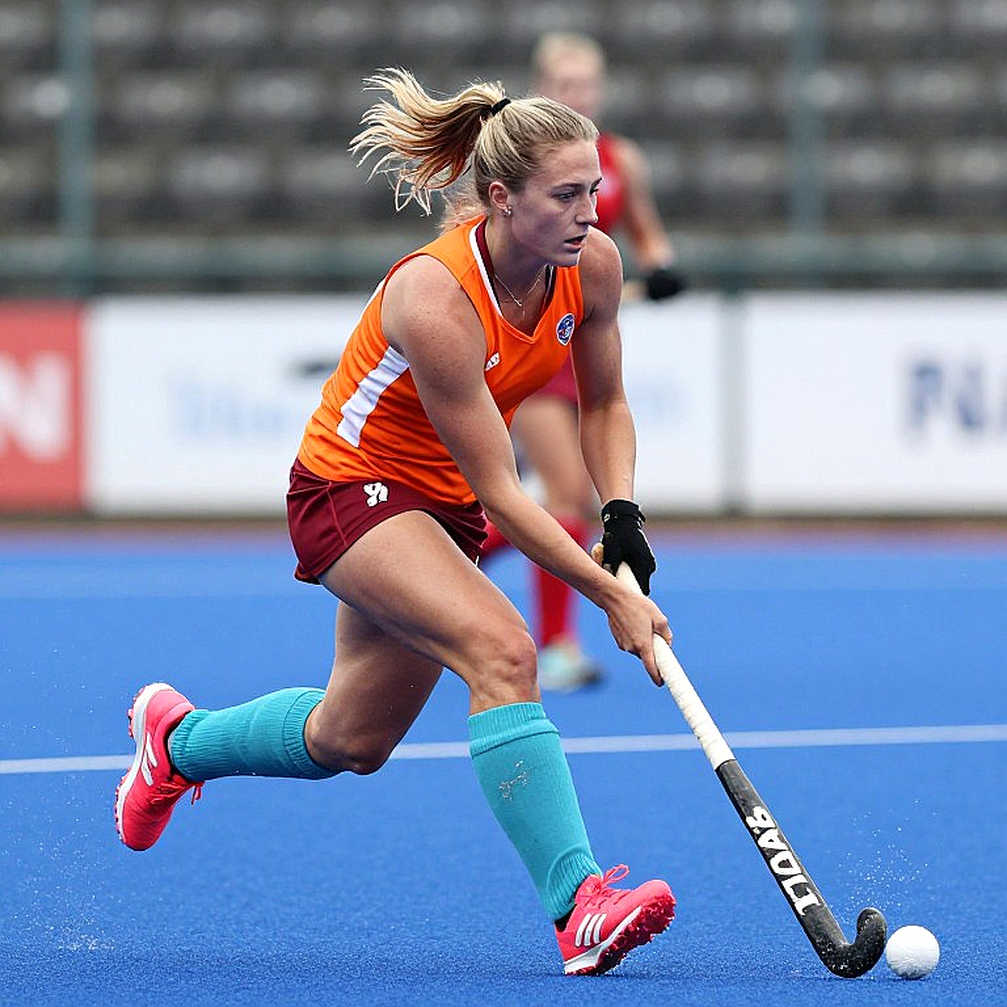
In the Asian Games women's field hockey competition, India have played two Pool B matches and won both — 19-0 against Uzbekistan, 17-1 against Indonesia. Thirty-six goals scored, one conceded, a goal difference of plus 35. Thailand come next, after a rest day.
Those figures are the only available evidence, and they come from a single match report, not independently cross-checked against FIH or Asian Hockey Federation statistics. Scorelines, goal distribution, cap numbers — all of it sits on a pending-verification list. What the report does not contain is louder: how many corners India won, how many shots they took, how often they entered the circle. None of it is there.
The bigger picture: the Asian Games champion earns a direct berth to the next Olympic Games. On the road to Los Angeles 2028, that is India's cleanest path. Lose a knockout to China, South Korea or Japan and the harder global qualifier awaits. Thirty-six group-stage goals do not change that, because the opposition did not warrant the question.
A market note before the analysis: the visibility of Asian women's hockey remains tournament-pulse driven. Television and sponsors wake for two weeks, then fall away for want of a league calendar. In a structure with no earning pathway for players, thirty-six goals do not grow a market — they grow a headline.
I have my own rule: no model is published before a minimum tape threshold is met. Two matches against two far lower-ranked opponents cannot support a model of India's knockout readiness. What it can support is a list of questions.

The core: three numbers, three gaps
A 41 percent penalty-corner share is not abnormal in modern hockey, but that share inflates against weak defences. China and Korea defend corners with first-runner speed and goalkeeper positioning. What India's set-piece share looks like against that standard is the real question. The problem is that the report omits how many corners India won, which makes the conversion rate uncomputable. The most important number behind the claim is missing from the claim.
The missed penalty stroke and the one goal conceded in the third quarter are the only stress tests of the system. Concentration slipping during a blowout is not news; what is news is that Navneet's miss exposed the actual risk — set-piece conversion reliability under pressure. In a knockout, one corner decides a match. That single missed stroke carries more information than the seventeen goals.
Deepika's eleven goals in two matches, and the rise of a teenager like Sakshi Rana, are genuine positives — but without opponent adjustment the predictive value approaches zero. Spreading the scoring load across more than eight names is an advantage in a tournament built on rolling substitutions. That depth is still untested, because no opponent has applied real pressure in India's defensive third.
Savita Punia's 321 caps are the hardest and most verifiable fact of this tournament — the most by any Indian woman in the sport. It is the only claim that does not rest on a scoreline. It is also a warning: goalkeepers in hockey are genuinely non-substitutable, and India's first choice is still the veteran. Who the successor is, and how many minutes she is getting, is absent from this report. The goalkeeping coach at the national camp and the selection committee are the ones who must answer; "nobody" is not an acceptable reply.
What I call an administrative autopsy in Bangladesh hockey is running here on a bigger budget. One stadium, an irregular league calendar, equipment costs — the same three barriers that push girls out of the game before they turn 21. The 19-0 and the 17-1 expose a fracture in investment structures, not in talent. India's teenage scorers are growing inside an ecosystem Bangladesh's girls cannot even enter. That comparison does not diminish the seventeen goals; it explains what the number is a sample of.
The contrarian read: the danger is not the corner, it is the cold entry
The familiar line is that India depend on penalty corners, therefore they are vulnerable. My reading puts the risk elsewhere. India will enter the knockout stage having played four straight matches in none of which they were genuinely pressed. Then comes an XI where corners arrive in the first ten minutes, where a referral arrives, where doubt arrives. Match sharpness cannot be measured numerically, and it is the largest unknown here.
A second reading: the same rotation being sold as "deep bench" can be read the other way — the first-choice XI has barely played together under pressure. One dataset, two opposite conclusions, the difference entirely in framing.
Third, importing European pressing logic would be a mistake. The Asian Games calendar, Japan's hot and humid conditions, the play-rest-play rhythm — if those three decide the matches, fitness management is a bigger variable than tactical nuance. That calendar does not exist in a European league, which makes the European model inoperative here.
What to watch in the next match
Against Thailand the scoreline will probably be large again. Nothing new will be learned. Keep the verification list short: how many corners India win and convert against their first top-15 opponent; what share of goals still come from open play; and how many minutes the second goalkeeper gets. The third question is the quietest and the most important.
The last question is one of accountability: when a teenager who scores at nineteen is out of the game at twenty-two, who is responsible? A title will bury that question. A failure will not — and the answer will then have to be found far behind Los Angeles, in a place where no corner statistic helps.