
Swim GP: The Swimming Meet That Counts Fans Instead of Medals — And Waits for 2032
মূল উত্তর: Swimming Australia ও নাইন যৌথভাবে চালু করেছে Swim GP — মেলবোর্নে দুই দিনের দলগত ইভেন্ট, চারটি দল, মোট আশি জন সাঁতারু। উদ্দেশ্য ২০৩২ ব্রিসবেন অলিম্পিকের আগে দর্শক-সম্পৃক্ততা তৈরি। ফলাফলে বোনাস পয়েন্ট, Coachদের কল ও দর্শকের ভোট যুক্ত; এটি কোনো যোগ্যতা নির্ধারক প্রতিযোগিতা নয়। মূল তথ্য: - Swimming Australia-এর ঘোষণা: চার দল, প্রতি দলে কুড়ি সাঁতারু — মোট আশি জন। - ভেন্যু মেলবোর্ন স্পোর্টস অ্যান্ড অ্যাকুয়াটিক সেন্টার, তারিখ ১৩ ও ১৪ নভেম্বর। - সম্প্রচার অংশীদার নাইন; সমর্থন ভিক্টোরিয়া সরকারের। - দলনেতা Dean Boxall, Damian Jones, Mel Marshall, Craig Jackson। - Formatে স্কিনস, প্যারা স্ট্যাগার্ড-স্টার্ট, মিক্সড রিলে, মিস্ট্রি মেডলে। সূত্র: Swimming Australia-এর ইভেন্ট ঘোষণা এবং নাইন সম্প্রচার অংশীদারিত্বের বিবৃতি; ঘোষণায় প্রকাশের নির্দিষ্ট তারিখ উল্লেখ নেই। ভোটের প্রকৃত Weight উৎসে ঘোষিত নয়। সম্ভাব্য পাঠকের প্রশ্ন: প্রশ্ন: Swim GP কি অলিম্পিক বা বিশ্ব চ্যাম্পিয়নশিপের যোগ্যতা নির্ধারণ করে? উত্তর: না, এটি আমন্ত্রণভিত্তিক প্রদর্শনী-ধাঁচের দলগত ইভেন্ট, যোগ্যতার কোনো পথ নয়। প্রশ্ন: দর্শকের ভোট কি ফলাফল বদলাতে পারে? উত্তর: উৎস অনুযায়ী ভোট বোনাস পয়েন্ট হিসাবে যুক্ত, তবে তার Weight কী, সেটি স্পষ্টভাবে ঘোষণা করা হয়নি। প্রশ্ন: বাংলাদেশের প্রসঙ্গ কেন জরুরি? উত্তর: কারণ অস্ট্রেলিয়া তার সাঁতারের গভীরতা লিখে রাখছে, আর বাংলাদেশ এখনো ইনজুরি রেজিস্ট্রি ও পুল-নিরাপত্তার হিসাব লিখতে শুরু করেনি।
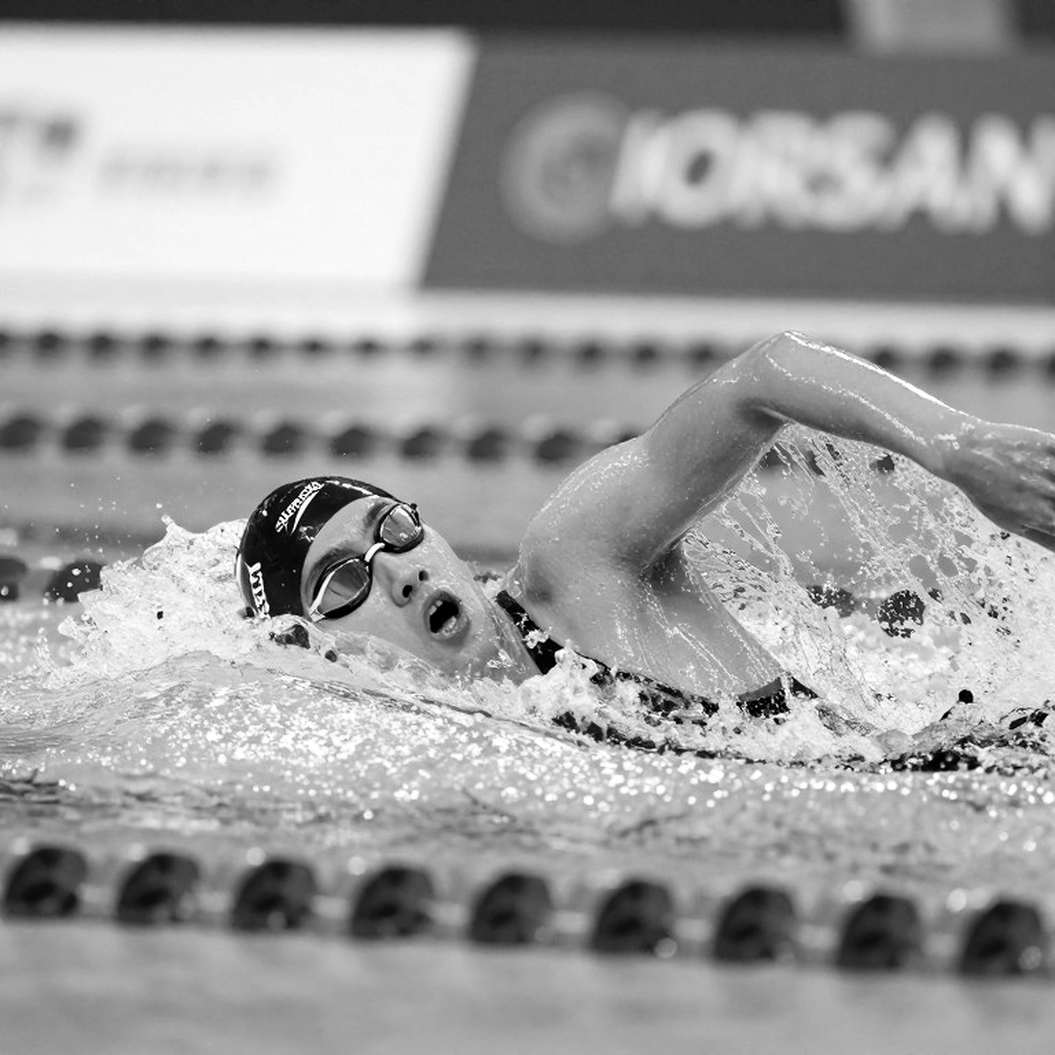
On 13 and 14 November, Melbourne. Across two days at the Melbourne Sports and Aquatic Centre, four teams will take the water, twenty swimmers each — eighty Australians in all. Mixed relays, individual races, para staggered-start events, skins races and mystery medleys. And into the final reckoning will go bonus points, coaches' calls and fan voting. The name: Swim GP.
I have stood on that kind of deck before, just from the other side of the world. In December 2026, at the outdoor 50-metre pool in Mirpur for the 26th National Swimming, Diving and Water Polo Championship, I was the only woman in the officials' block. Navy took the team title, Army second, BKSP third; nobody was surprised. What nobody wrote down was that a fifteen-year-old butterfly swimmer from my own Rangpur division had raced her heat with a shoulder she had hurt in a pond three weeks earlier. I went looking for the shoulder nobody wrote down. I came back and opened a ledger: the date of the pain, who knew, how long the rest window should have been.
From Rangpur today, the picture inverts. In announcing Swim GP, Swimming Australia is writing down exactly what usually goes unrecorded — audiences, engagement, brand. The federation has built the event jointly with Nine, with support from the Victorian Government. By the federation's own account, the response to Australia v The World last year is the foundation of this platform, for both branding and commercial success. The ambition is plain: before Brisbane 2032, every household in Australia should know the names of the Dolphins.
The language of the release is itself a document. Zac Stubblety-Cook says fandom is central, that this format creates FOMO, that it breeds heated rivalries. When an Olympic champion says that in his own voice, it tells you athletes are not only competitors here; they are co-marketers. And the stated goal — every Australian household knowing the Dolphins' names — is not the wish of a single meet but a multi-year marketing campaign of which Swim GP is one instrument.
Before reading results, read the format. A skins race is knockout sprinting: the same distance again and again, the slowest progressively cut, until one remains. It is not a pacing test; it is a repeated maximal-effort test. A swimmer used to one 50-metre race absorbs a very different load when asked for six or seven at full speed. Start, underwater dolphin kick, turn, finish — all of it returns, with short recovery gaps. And the format contains no mechanism to reduce that load, because the repetition is precisely what the audience came for.
Para staggered-start racing is more complex still. For athletes across different classes to race head-to-head, you need classification-based handicapping — who starts how many seconds earlier. That is a structural construction of competitive equity, and if it is not transparent, the credibility of the whole event wobbles. Get the classification grouping wrong and the swimmer who worked hardest can end up behind on the results sheet, with no way for an outsider to check the arithmetic.
Mixed relays bring gender leg-order strategy: who swims which leg, in what sequence. Mystery medleys leave the stroke order undetermined until the event itself. Both formats shrink the space for tactical planning and expand the space for instant reaction — presentation drama matters more here than an athlete's long preparation.
Why these formats? The inference is not difficult. It is hard to imagine a slot in Australia's domestic championship calendar where relays, skins and medleys sit side by side in one evening. They are not championship-friendly; they are broadcast-friendly. Short races, fast results, repeated drama, advertising gaps. This meet is designed to show swimming, not to measure it.

So the rule for reading results should be explicit. As a performance read, this event's results get a full discount; as an engagement read, they get none at all. There is no A-cut, no B-cut, no trials, no qualifying window. Selection is by invitation — the four team leaders, Dean Boxall, Damian Jones, Mel Marshall and Craig Jackson, take whoever they want. Who wins says less about swimming capacity than about what television wants.
One number nonetheless stands like cold fact. Four teams, twenty apiece — eighty swimmers, all Australian. That is the most forceful piece of information in the announcement, because it proves that Australia's domestic pipeline currently holds eighty swimmers of international standard around whom a tournament can be built. For a small federation, that is beyond imagination. Most swimmers at Bangladesh's national championship come out of the BKSP, Navy and Army structures, and not all of them sit inside full professional coaching setups.
One more thing deserves remembering. The federation cites last year's Australia v The World as evidence of appetite, but publishes no attendance, ratings or audience figures anywhere. Building a franchise's future on one event's reception means trusting a sample of one. That is not a wrong decision, but it is also not a verified claim.
Bangladesh's swimming ceiling is pinned to clear numbers. Our national record in the 50m freestyle sits in the 24-to-26-second range, and around 58 seconds in the 100m backstroke — honourable marks that do not open the door to an international semifinal. There is no indoor international-standard pool; there is one aging outdoor tank at Mirpur, where the monsoon breaks up training blocks. After Brojen Das and Mosharraf Hossain, the English Channel record holds a thirty-seven-year silence. Against that reality, the distance between Australia's list of eighty and ours is not only a distance of talent; it is a distance of accounting culture.
And one number is our own to write. Roughly forty children drown in Bangladesh every day. In the closed-pool year of 2026, a sixteen-year-old from Kurigram went to train alone in July and did not come back. That season, on the phone with SwimSafe trainers, I logged forty-one unsupervised training sessions — which water body, what depth, who was watching. In the closed-pool year, I learned to read silence as a symptom. Australia's Swim GP is the exact inverse of that silence: nothing is buried here, everything is announced.
The risks deserve a look. The largest is structural — the event stands on one broadcaster and one state government's support. Victorian money means a substantial part of the business case is really state event-tourism. Second, star dependency: Cam McEvoy, Mollie O'Callaghan, Lani Pallister, Zac Stubblety-Cook. Without those names the pull drops, and if even one of them is absent across those two days, the market value of the meet takes a direct hit. Third, how much weight fan voting actually carries is never stated — and where weight is undefined, interpretive gaps open.
The fourth risk is calendar. A domestic team event in November sits very close to the international short-course season. Swimmers on the world circuit are not guaranteed to attend, and if they do, they carry two seasons' load at once. A calendar arranged for television convenience often cannot reconcile the arithmetic of water and body.
This is where the contrarian reading sits. Many will say that once voting counts, it stops being real sport. I see the inverse: voting is not the core problem; the core problem is the load ledger. Eighty swimmers across two days, with repeated maximal-speed dives in the skins — that is an unusually severe load profile. Where a physio culture and an injury registry exist, this kind of stress gets written down. But exhibition events fall into exactly the category nobody calls real competition — so nobody records it. I keep a notebook of injuries that never made the broadcast. The shoulder that flares in a December skins race will surface in the next qualifying season, and it will not be written anywhere.
The second inversion is this: commercial events are routinely accused of cheapening sport. For a system like Bangladesh's, the problem runs the other way. Ours is not over-commercialisation; it is near-total absence. No indoor pool, no merit qualification pathway, no injury registry. Romance is the wrong instinct here: the river-and-pond training story has to be held together with SwimSafe's arithmetic, or the risk slides under the narrative. When a swimmer points to a shoulder, I check the calendar first — the scan comes later. The scan said one thing; the timeline said another, every time.
So the list of things to watch is short and specific. Whether the real weighting of fan voting is published. Whether the star list holds, or someone withdraws two days out. Whether venues and partners diversify beyond Nine and Victoria. And whether the dates collide with World Aquatics' calendar. If the model survives, Australia does not merely gain a meet; it creates a domestic GP event category that other strong federations may copy. And for Bangladesh, the thing to imitate is not the voting gimmick. The thing to imitate is the writing-down. Before you build a league, you build a ledger; before you build a shoulder, you understand the load. If someone asks in two years what happened to the Dolphins' bodies across those two days in November, the answer should not have to be hunted for in a press release.