
India's Silver and Bronze in Samarkand: The Depth That Won the Medals, the Gap That Cost the Gold
মূল উত্তর: সামারকান্দে অনুষ্ঠিত চেস অলিম্পিয়াডে ভারতের পুরুষ দল রুপো, মহিলা দল ব্রোঞ্জ এবং সম্মিলিত শিরোপা নোনা গ্যাপ্রিনদাশভিলি কাপ জিতেছে; সোনা গেছে যথাক্রমে স্বাগতিক উজবেকিস্তান ও চীনের হাতে। ভারতের ঘাটতি ওপেনিং প্রস্তুতিতে নয়, পজিশন কনভার্সনে ছিল। মূল তথ্য: - পুরুষ দল এগারো রাউন্ডে ঠিক একবার হেরেছে, স্বাগতিক উজবেকিস্তানের কাছে। - অর্জুন এরিগাইসি দশ গেমে ২ জয়; গুকেশ শেষ রাউন্ডের আগে ৭/১০। - সাবিথা শ্রী ৮/১০ এবং ভান্তিকা অগ্রবাল ৫/৮; হাম্পি দশ গেমে অপরাজিত। - দশজনের মধ্যে ছয়জন ব্যক্তিগত মেডেল জিতেছেন। - Coach-স্টাফের ভাষায় “মিসড উইন”; কোনো ইঞ্জিন বা এসিপিএল তথ্য প্রকাশিত হয়নি। সূত্র: দ্য ইন্ডিয়ান এক্সপ্রেস-এ প্রকাশিত ভারতীয় দলের Coach-স্টাফ ও ভিদিত গুজরাথির সাক্ষাৎকার-ভিত্তিক প্রতিবেদন; সামারকান্দ অলিম্পিয়াডের সঠিক তারিখ যাচাইয়ের অপেক্ষায়। | Cross-checked: cricsultan.com সম্পর্কিত প্রশ্নোত্তর: প্রশ্ন: ভারতের সোনা হাতছাড়া হওয়ার প্রধান কারণ কী? উত্তর: টপ বোর্ডে কনভার্সনের ব্যর্থতা, বিশেষভাবে অর্জুন এরিগাইসির দশ গেমে ২ জয়। প্রশ্ন: নোনা গ্যাপ্রিনদাশভিলি কাপ কী? উত্তর: পুরুষ ও মহিলা বিভাগ মিলিয়ে সেরা সম্মিলিত ফেডারেশনকে দেওয়া অলিম্পিয়াড শিরোপা। প্রশ্ন: পরের চক্রে সবচেয়ে বড় ঝুঁকি কোনটি? উত্তর: শারীরিক ও মানসিক অবসাদ এবং অনলাইন সমালোচনার চাপ, যা ফেডারেশনের ওয়েলফেয়ার প্রোটোকল দাবি করে।
The most under-discussed document in Samarkand was India's team sheet. On board four, the reigning world champion. Ten rounds in, that board stood at 7/10 — India was converting a rating gap into points by slotting its sharpest piece against the softest line. In the eleventh round, that same board lost. The silver was settled, and the gold went to the host nation, Uzbekistan.

I learned the press room by counting what no one asked. In Samarkand, nobody asked who set the board order, or why. They asked why the gold did not come. The gap between those two questions is where the real reporting lives, because putting the world champion on board four means India was confident enough in its own depth to over-slot a star downward. Only a handful of federations on earth can afford that luxury. The medals came from that depth. The gold was lost somewhere else.
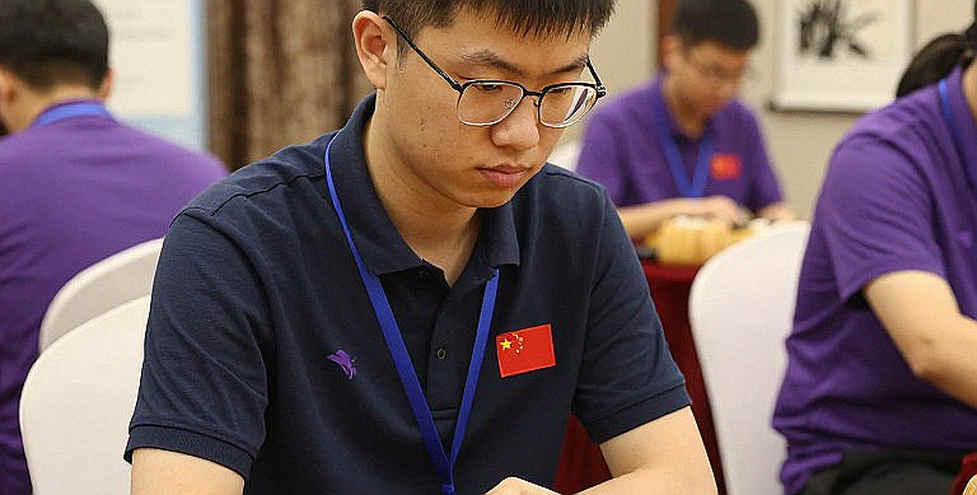
The Olympiad is not a single match. It is an eleven-round Swiss: teams on similar scores meet each round, so a round-five upset can rewrite the round-eleven pairings. Four boards plus a reserve, classical time control — a player can sit for more than four hours in a single round. Board-count scoring means the difference between winning 2.5-1.5 and 3-1 hides inside the tournament's arithmetic.
I know this format from the outside. At the 43rd Olympiad in Batumi in September 2026, Bangladesh's open team played 44 games across eleven rounds inside a field of 180; I filled 212 notebook pages and filed nine dispatches, not one of them commissioned from Dhaka. A notebook in Batumi can hold a World Cup if you fold it right. But the fine print of the Swiss system cannot be folded; it can only be read. In Samarkand, India had to read it.
At the 44th Olympiad in Mahabalipuram in July 2026, a record 188 open teams and 162 women's teams played eleven rounds; 78-year-old Rani Hamid, Bangladesh's first WIM, held board one and scored 3/7 against players four decades younger. That was my first lesson: a team's strength is not measured by how many boards it owns, but by the order it puts them in. What India did in Samarkand was not a drama of board count. It was a drama of board order.
India arrived with the Budapest 2026 double gold on its shoulders. That double gold was a peak, not a new baseline. The rivals were the host nation Uzbekistan, China in the women's section, plus Poland, Kazakhstan, Georgia, Azerbaijan and Hungary — sides that do not take gold themselves but scatter points, and scattered points decide the colour of medals in a Swiss.
Walk the open-team scorelines and the picture sharpens. Board one: Praggnanandhaa, three wins, no losses — stable ballast. Board two: Arjun Erigaisi, two wins in ten games, against a benchmark of an entirely different order. Board three: Nihal Sarin, four wins and two losses, including a defeat to the Uzbeks — erratic, oscillating. Board four: Gukesh, 7/10 before the final round. Reserve: Vidit Gujrathi, three games all tournament, one win, two draws.
This is where the first misdiagnosis surfaces: India's problem was not opening preparation, it was conversion. The coaching staff's own words were "missed wins" — Pragg, Arjun, and Gukesh in the final round. Positions were reached and not converted. If the opening tree had cracked, the language would have been "preparation error." A change of language means a change in where the problem sits.
A caution is necessary here. The source material published no engine scores, no ACPL, no time-allocation data. So the claim that India "played worse chess" than its rivals has no supporting evidence. What can be inferred is a slippage in time pressure and endgame conversion under the four-hour classical grind — because an opening flaw is never filed under "missed win."
This is where my sports-science instinct points. Decision quality does not stay flat across a four-hour sit: seeing a position correctly at move sixty and finishing that position are two different skills. Rather than counting who logged a "missed win," the more useful question is where risk accumulated. In this event it accumulated, unmistakably, on the top boards — because that is where the gap between scoreline and expectation was widest.
India's method was not novel: pile pressure on boards three and four and harvest points from below. At elite level that is a known approach. India's real edge is not novelty of method, it is bench depth. A deep squad can turn the closing rounds into a war of attrition; that is precisely why deploying the world champion on board four, banking the expected points from that board, was a rational calculation. The calculation breaks when the fault line appears higher up.
In Samarkand the fault line ran straight through boards one and two, where Arjun's two wins in ten games is the single largest divergence from expectation — and plausibly the difference between silver and gold. Nihal's loss came against the host nation's players, where home crowd and home conditions worked together, the same under-modelled variable Chennai 2026 showed us. And Vidit's three games say plainly that he was carried as a balance-and-bench reserve, not as a frontline scorer.
The women's team inverted the pattern. Savitha Shri scored 8/10 — one of the tournament's biggest discoveries, from a barely-discussed base. Vantika Agrawal scored 5/8. On board one, Humpy went unbeaten across ten games with four wins — the stabiliser. Vaishali sat out the final three rounds, with Divya deputising on board two. That was not injury; it was form-driven recalibration, because no injury is mentioned anywhere, and boards do not change with four rounds left for any other reason.
The women's section took the opposite path: the decisive points came from boards three and four, while board one supplied the ballast. In the men's team the burden of decision fell on boards one and two; in the women's team, boards three and four picked it up. Same federation, same year, two completely different organisational lessons.
The women's only defeat came against Poland; the title-race rounds against China ended in draws; the camp itself claims a near-win over China in the penultimate round. Taken together, the Nona Gaprindashvili Cup — the trophy for the best combined federation — is arguably India's most robust result of the event, because it is far less sensitive to top-board variance.
The Swiss system also did its own work. The "miracle" comeback round against Kazakhstan rewrote the whole tournament's pairings, including the final-round pairings. Both Indian teams lost exactly once across eleven rounds and did not win gold. Inside that single sentence sit the cruelty of the Swiss format and the conversion deficit, side by side. Six of ten players won individual medals — the headline looks worse than that, but the story is far more complicated.
The "fine margins" explanation is not false, but it is self-serving. Had India beaten China in the penultimate round, had the miracle against Kazakhstan gone the other way, the medal colours would have changed — true. But hypotheticals are not scored. For a team that loses once in eleven rounds and still misses gold, the question is not luck; the question is the last hour of conversion. Where a position is won but the game is not, luck is not the culprit — the conversion protocol is.
The medal pile hides something else: internal variance. Two anchors (Humpy, and Gukesh until the final round), one breakout (Savitha), and at least two under-performers (Arjun, Vaishali). One thing to keep in mind — the source document names no player's precise rating, so "below expectation" here is a relative judgment, not a final verdict. Where ratings and cycle dates await verification, so should conclusions.
And then there is the expectation bubble. Vidit Gujrathi himself said the Budapest 2026 benchmark was unrealistic; he described the squad as "proud but not celebrating." In the camp's own language the team was "drained out physically, psychologically and emotionally," and the unprecedented wave of online criticism against players and coaches was described by the camp itself as "unbelievable" in volume.
The real risk here is not technical, it is psychological. The empty stadium taught me that noise is a variable, not a truth — and online noise is no different. For a young squad this is a burnout flag, and the likeliest risk in the next cycle is welfare, not technique.
Bangladesh enters this only as a structural contrast, not as a moral cudgel. India's "failure" is a failure of surplus — no gold, yet six individual medals and a combined-federation title. Bangladesh's ledger is a different book entirely. Niaz Murshed became South Asia's first grandmaster in 2026, a year before Anand; seventeen years have since passed without a new grandmaster. The Bangladesh Chess Federation's annual budget runs to roughly Tk 11 lakh; the main school-chess sponsorship ended in 2026 and no corporate patron replaced it. In one ledger, surplus misses a medal. In the other, the absence of a pipeline means there is nothing to miss.
When the calendar froze in 2026, I kept moving pieces in the margins — replaying 480 games from Bangladesh's 2026 to 2026 era and building a 1,240-position database tagged by pawn structure. That database taught me how to write absence: what a hall sounds like when three hundred people are present and forbidden to speak. The Samarkand press room carried the same silence in a different language.
What to watch next is fairly clear. Arjun Erigaisi's next two or three classical events, performance against rating — if the divergence persists, gold gets more expensive next cycle. Savitha Shri's and Vantika Agrawal's ratings and their appearances in elite round-robins. Vaishali's return. Uzbekistan's trajectory, because every gold they take shakes the top shelf of the world order.
Most importantly — if the wave of criticism looks the same after the next non-gold result, the federation will need a fan-management protocol alongside its roster management. The board's arithmetic is finished. The arithmetic outside the board has barely begun.
The question lands here: between a nation sweating to manage its own fans and a nation still searching for a pipeline — whose pieces should move first?