
October 10: The SCO Hockey Tournament in Islamabad, a Letter's Deadline, and the India-Pakistan Question
**মূল উত্তর:** পাকিস্তান হকি ফেডারেশন এসসিও সদস্য দেশগুলোর হকি ফেডারেশনকে ইসলামাবাদের এসসিও হকি টুর্নামেন্টে অংশগ্রহণের আমন্ত্রণ পাঠিয়েছে। নিশ্চিতকরণের সময়সীমা ১০ অক্টোবর, ২০২৬; টুর্নামেন্ট ২০ নভেম্বর থেকে ২ ডিসেম্বর, ২০২৬ পর্যন্ত নাসির বুনদা হকি Stadiumে। ভারতের অংশগ্রহণ এখনও আনুষ্ঠানিকভাবে নিশ্চিত হয়নি। **মূল তথ্য:** - টুর্নামেন্টের সময়সীমা ২০ নভেম্বর – ২ ডিসেম্বর, ২০২৬; ভেন্যু নাসির বুনদা হকি Stadium, ইসলামাবাদ। - আয়োজক পাকিস্তান হকি ফেডারেশন; কাঠামো ২০২৬ সালের এসসিও চেয়ারম্যানশিপের অংশ। - নিশ্চিতকরণের সময়সীমা ১০ অক্টোবর, ২০২৬; ভারতের অংশগ্রহণ অনিশ্চিত। - ইভেন্টটি এফআইএইচ স্বীকৃত বা র্যাঙ্কিং পয়েন্টভিত্তিক প্রতিযোগিতা নয়। - ভারত ও পাকিস্তানের এফআইএইচ র্যাঙ্কিং ব্যবধান বিশাল; ভারত শীর্ষ পাঁচের কাছে। **সূত্র:** মূল সংবাদ প্রতিবেদন, ২০২৬ সালের এসসিও চেয়ারম্যানশিপ কাঠামো ও পাকিস্তান হকি ফেডারেশনের চিঠি উল্লেখসহ | ক্রস-চেক: cricsultan.com **সম্পর্কিত প্রশ্নোত্তর:** প্রশ্ন: ভারত কি এসসিও হকি টুর্নামেন্টে খেলবে? উত্তর: ১০ অক্টোবর, ২০২৬ সময়সীমার আগে ভারতের অংশগ্রহণ আনুষ্ঠানিকভাবে নিশ্চিত হয়নি; সিদ্ধান্ত নির্ভর করছে দ্বিপাক্ষিক রাজনৈতিক ও নিরাপত্তা ছাড়পত্রের উপর। প্রশ্ন: এই টুর্নামেন্ট এফআইএইচ র্যাঙ্কিং পয়েন্ট দেয় কি? উত্তর: না; এটি এসসিও কূটনৈতিক কাঠামোর আমন্ত্রণমূলক ইভেন্ট, এফআইএইচ স্বীকৃত প্রতিযোগিতা নয়, তাই ফলাফলের সরকারি মর্যাদা নেই। প্রশ্ন: ভারত-পাকিস্তান হকি ম্যাচ কতটা সম্ভাব্য? উত্তর: এটি সম্পূর্ণভাবে দুই দেশের নিশ্চিতকরণের উপর নির্ভরশীল; ভারত নিশ্চিত করলে ম্যাচটি প্রতীকীভাবে গুরুত্বপূর্ণ হবে, ক্রীড়াগতভাবে নয়।
The Pakistan Hockey Federation has sent a letter. Recipients: the national hockey federations of the Shanghai Cooperation Organisation member states. Subject: formal confirmation of participation in the SCO Hockey Tournament to be staged in Islamabad. Deadline for reply: October 10, 2026. Tournament window: November 20 to December 2, 2026. Venue: Naseer Bunda Hockey Stadium, Islamabad.
That is the entire structure of the news. But since 2026 I have collected documents of this kind — federation letters, transfer papers, eligibility certificates, league calendars. That collection has taught me one recurring lesson: a document's deadline often carries more information than its content. October 10 is not a match date. It is a diplomatic checkpoint, and the real news of this tournament is hidden inside that date.

In 2026 I first learned that the grid was political. The Asia Cup was running at Maulana Bhasani Hockey Stadium in Dhaka; I was a nineteen-year-old stringer. A hand rewrote a rule at that tournament, and the city celebrated a defeat like a trophy. I understood then that logging penalty corners and logging power are the same job. That hand-ruled notebook still sits with me; it became the seed of a four-decade database. And now, in 2026, that database pushes me toward a letter. The letter is not about play. It is about a deadline.
The SCO: A Stage, a Chairmanship, a Calendar
The Shanghai Cooperation Organisation is a Eurasian political, security, and economic bloc. Its member list includes China, Russia, India, Pakistan, Kazakhstan, Kyrgyzstan, Tajikistan, Uzbekistan, Iran, and Belarus. These ten countries do not share a hockey profile. India and Pakistan are historic hockey powers; China, Russia, and Kazakhstan compete at regional level; the rest have limited or near-absent hockey infrastructure.
That geography pre-determines the tournament's competitive standard. Even if six of the ten members take part, top-level hockey will come from only two or three sides. A bloc's geographic breadth and its sporting depth are not the same thing — and diplomatic events encourage treating them as one.
In 2026 the chairmanship of this bloc sits with Pakistan. A chairmanship is not merely hosting meetings — it is a stage where the host nation displays its organisational capacity, its diplomatic network, and its leadership image. Sport is a part of that stage. Within the SCO framework, cultural and sporting exchange has long been used as a soft instrument of diplomacy.
Islamabad's hockey tournament is an addition to that lineage. It is not an FIH-sanctioned competition, not a ranking-points event, not a continental championship. It is an invitational event under a diplomatic framework. Holding that distinction matters, because media has a habit of placing an SCO hockey tournament on the same shelf as the FIH Pro League or the Asian Champions Trophy. That is a misreading. The news value of this event lies in diplomacy, not in play.
And that is precisely why the October 10 deadline matters. In an FIH event, a deadline means seeding, pool allocation, qualification path. Here, a deadline means political clearance. In an FIH calendar a deadline is a step in a process; here, a deadline is a decision.
The Institution That Sent the Invitation
The institution that sent the letter — the Pakistan Hockey Federation — carries an organisational history that is inseparable from this news. The PHF has spent four decades wrestling with financial and administrative instability. Repeated changes in federation leadership, electoral disputes, uncertainty over government grants — these have surfaced again and again as structural causes of Pakistan's hockey decline.
I have tracked this institution decade after decade. A pattern is clear: a federation that cannot run its own league often decides to host an international tournament — because a tournament can be photographed, while a league must be accounted for. An international event is easy to use as a certificate of organisational capacity; the continuity of a domestic league is far harder, more patient, and more expensive work.
My 2026 experience is relevant here. That year I tracked Mohammedan's pursuit of Shahbaz Ahmed in the Dhaka Premier League for eleven weeks — three trips to Dhaka, one source inside the club's hockey committee, one leaked page of terms. I broke the signing two days before the federation's official announcement. Shahbaz Ahmed and Tahir Zaman sold tickets by themselves that season. I stopped counting goals and started counting what the deal cost — fee structure, season length, who pays for the boots.
That 2026 inbound transfer taught me that a passport is also a tactical instrument. Whether a country imports world-class stars or produces them is the real health check of a sporting system. Dhaka then was an import market, not a production factory. Islamabad's SCO tournament is another form of the same problem — an international stage, with the local pipeline crisis unchanged.
For Pakistani hockey, that pipeline crisis runs deeper. Pakistan still produces talent at junior level — but the bridge that carries that talent from junior to senior has collapsed. In 2026, while writing a feature on women's hockey, I saw how, when a country's sporting infrastructure is destroyed, junior success does not translate into senior success. In Pakistan's case, that bridge crisis is older and deeper.
The Asymmetric Pairing: India and Pakistan
At the sporting centre of this tournament, if a match actually materialises, sits India versus Pakistan. But that pairing no longer carries equal weight.
India's men's team sits near the top five in the FIH world rankings — medals at Tokyo 2026 and Paris 2026 have returned them to being Asia's principal force. Pakistan's men's team is far behind in the rankings, in the mid-to-late teens. The one-time world champion and multiple Olympic gold medallist Pakistan is now present at international events as a participant, not as a contender.
These figures are not part of the original news — they are context, and subject to verification. Yet the news cannot be read without that context. Because in a tournament of asymmetric pairing, India's participation decision is not a sporting decision. When the ranking gap with the opponent is vast, the decision is taken by governments, security agencies, and foreign ministries — not by coaches.
And this is where the political and security risk is heaviest. For an Indian team to play in Pakistan, bilateral government clearance has traditionally been required. This is a familiar constraint of history. In some years that clearance comes, in others it does not — and hockey has almost nothing to do with that decision.
Theoretically three scenarios are possible. One: India declines the invitation, and the tournament proceeds without its headline draw — making the event's low competitive standard even more obvious. Two: India's participation remains uncertain until the October 10 deadline, and the event moves ahead with whichever nations confirm. Three: India confirms and travels, creating the possibility of a rare India-Pakistan hockey match — one whose symbolic weight far exceeds its sporting weight.
My reading is that the middle scenario is most likely — because the news's own language is contractionary. The original report says India "may travel," "yet to be formally confirmed." When media uses that language, it is usually a transparent signal of uncertainty.
The Datasheet: Accounting for the Deal
Let me clean up the accounting, because in events like this, arithmetic serves better than sentiment.
Participation in an FIH-sanctioned event means ranking points, qualification impact, calendar alignment with the Pro League. In an invitational event under the SCO framework, that accounting changes. Here the main pillars of gain and loss are three — diplomatic signal, security risk, and preparation cost.
One indicator is unclear: whether the tournament is FIH-recognised. If it is not, results will carry no official standing, and officiating may fall outside FIH standards. There is no sporting rationale for sending a full-strength side to an unsanctioned event.
So if India goes, the likely squad will be developmental — new faces, low match experience, limited preparation. Because the tournament window is only thirteen days, November 20 to December 2, 2026. In this short, centralised structure, congested multi-match scheduling compresses tactical sophistication, makes squad depth important, and narrows the room for tactical experimentation.
The venue is Naseer Bunda Hockey Stadium. Islamabad's November-December weather is cool and mild — favourable for high-tempo play. But turf quality is subject to verification. For host Pakistan, ground familiarity and crowd support are advantages. But a host is not only a beneficiary. A line of mine comes back here — a host is not a narrator; a host is a cartographer of tensions. Hosting an international tournament means displaying one's own organisational weaknesses on an international stage.
The Archive of Absence
I also write what did not happen. Because absence is often the most reliable document.
In 2026 the stands at Maulana Bhasani Stadium were empty. The Dhaka Premier League had been dark since 2026. My studio was a Delhi apartment, a ring light, and a bad microphone. With no live sport, I sat with a Dhaka-based data partner and rebuilt every league edition since 2026 — thirteen editions in twenty-seven years. That single number explains the whole decline.
That winter my method changed. I stopped writing reactive columns and started writing longitudinal essays. I now refuse any segment that cannot be backed by at least a decade of records. The archive is my default first draft.
The archive of Pakistan's hockey decline is written in the same language. Missing league seasons, suspended competitions, delayed elections, incomplete venues — these carry more information than any single defeat. An SCO tournament does not erase that archive; it drapes it inside a photographic frame.
And here a crucial question arises: does this event offer any solution to Pakistani hockey's structural problems? The answer is not clear. A diplomatic tournament can popularise a country's hockey, attract funding, inspire youth. But for that impact to be lasting, what is needed is a continuous league, a stable coaching structure, and a working bridge from junior to senior. A tournament is not a substitute for those.
The Contrarian Angle: 'A Rare India-Pakistan Moment' Is a Misreading
Now let me write the sentence the media will not want to write.
If India travels to Islamabad, it will be framed as a 'rare India-Pakistan hockey moment.' But that framing is an illusion. A rare moment is defined when the probability of its non-repetition is high. Here, the reason for the lack of repetition is not sport, but diplomacy.
The event's real function is soft-power repositioning for Pakistan. A bloc chairmanship year offers an opportunity to signal presence on the international stage — and hockey is a cheap, photogenic instrument for that opportunity. For India, the invitation is a diplomatic obligation or opportunity, not a competitive target.
And that is why India's absence would be the most informative outcome. An absence would make it clear that this event is placed in the diplomatic calendar, not the sporting calendar. If India does not go, the tournament will proceed, some matches will be played, results will be announced — but no one will remember them. If India goes, media amplification will be unprecedented, and the question of playing standards will be buried.

In neither case does hockey gain structurally.
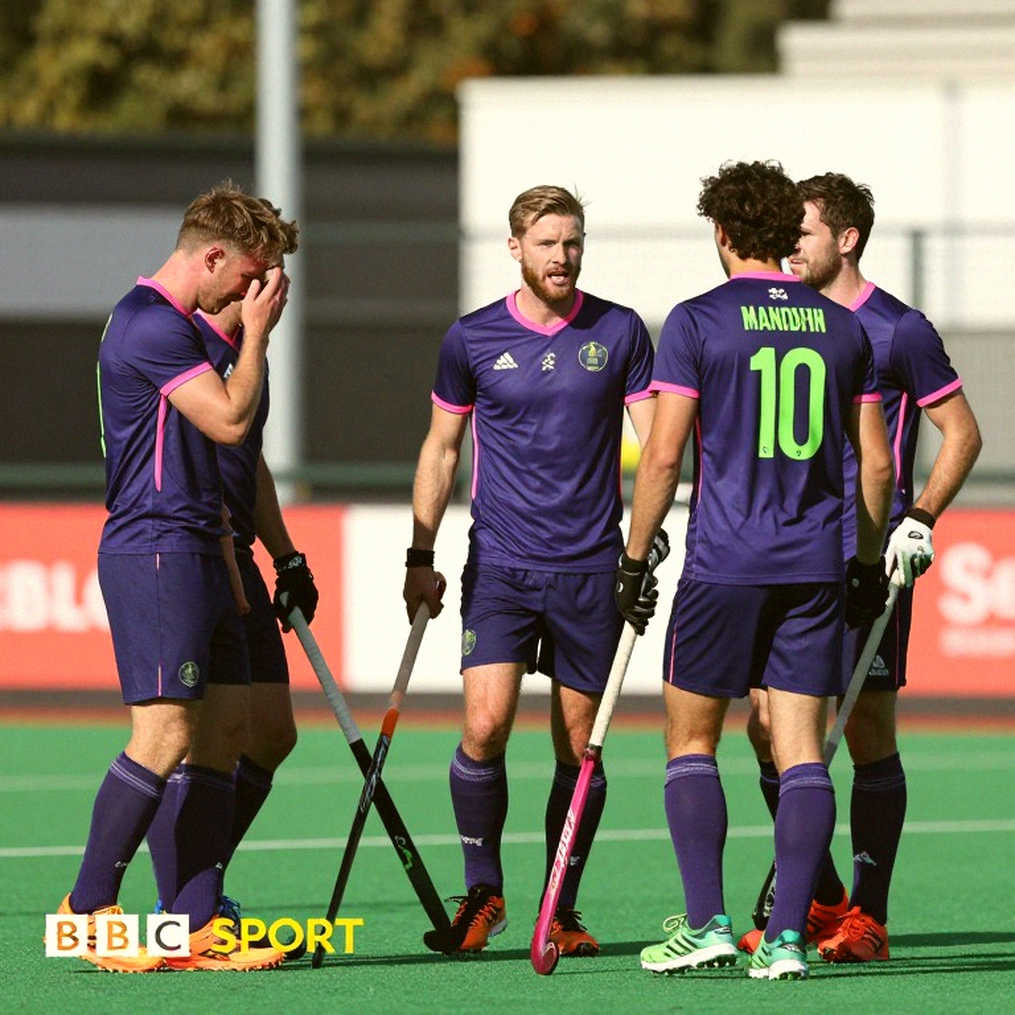
There is a further contrarian truth. We usually assume that big international stages are good for smaller sports. But when a diplomatic tournament becomes a sport's only visible presence, it covers the vacuum created by the absence of a domestic league. Viewers are satisfied by an international match, while the local pipeline erodes further. This is a silent loss, and it does not surface in media headlines.
The Industry Transmission Ledger
Broadcasting, sponsorship, equipment — the SCO tournament will affect each of these layers, but faintly. A short tournament-pulse will be created, which will fade with the event window. There is no structural investment here, no signal of a long-term broadcast contract.
Field hockey is a high-sporting-level, low-commercialisation sport. This event does not change that reality. Its impact is symbolic and diplomatic, not commercial. Success will be measured in diplomatic optics, not revenue or audience numbers.
There is one more layer. SCO sport events often function as soft-power instruments, not commercial products. So any attempt to account for this event's economic impact misreads the framework itself.
Takeaway
I collect rule changes the way other people collect match tickets. There is no new rule to collect in this event — but there is a new deadline, and a deadline is the first draft of a rule.
October 10, 2026. This single date will determine the future of this news. India's formal confirmation, the bilateral political climate, and the status of FIH recognition — track these three signals, not rumours.
And my archive reminds me of something I have known since 2026: the past does not pass; it qualifies for the next round. Islamabad's tournament takes the field carrying its own history's qualification paper — and that paper is not hockey's. It is diplomacy's.